Textile Waste Shredder
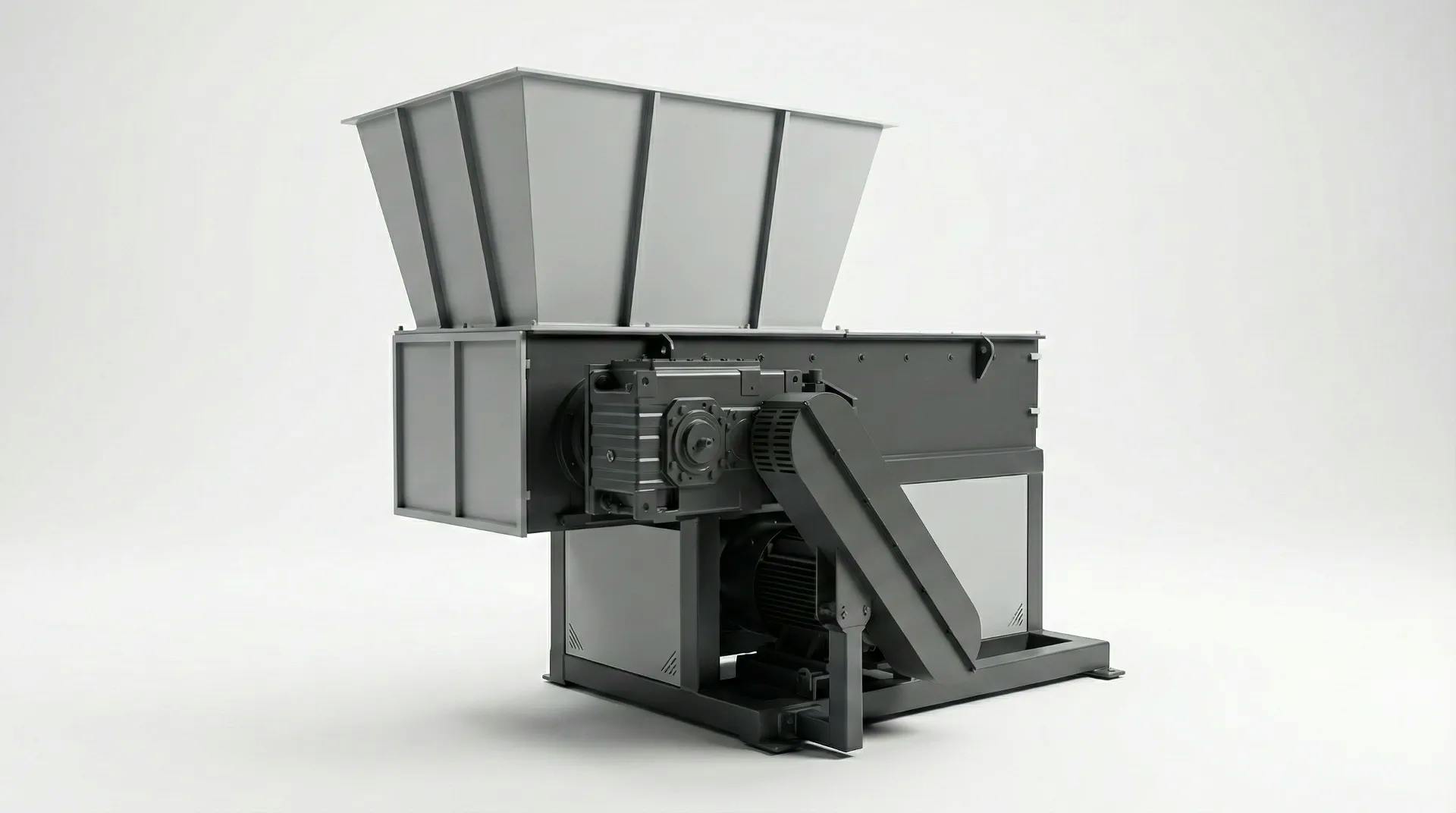
Textile waste shredder for fabric scraps, garments, nonwovens, and mixed textile waste. Screen-controlled output for downstream separation, fiber opening, or densification. See Equipment or request a Quote.
Anti‑Winding Design
Rotor and chamber geometry reduce wrapping from stringy textiles and yarn bundles.
Screen‑Controlled Output
Replaceable screens define particle length (typ. 10–60 mm) for consistent downstream handling.
Stable Feeding Options
Configure conveyor infeed, press roller, or hydraulic pusher depending on bulk density and material form.
Low‑Speed, High‑Torque Drive
Quiet operation with strong cutting force for dense rolls, layered garments, and thick fabric stacks.
See the Shredder Platform in Action
Watch controlled, low‑speed shredding and see how screened discharge delivers consistent piece size. Ask us about anti‑winding configurations for stringy textiles, yarn bundles, and mixed garments.
- Low‑speed, high‑torque cutting for tough, layered feed.
- Replaceable screens for consistent output size.
- Configurable feeding for loose scraps, bags, or rolls.
Controlled Shredding for Soft, Tough, and Stringy Textiles
Textile waste behaves differently than rigid plastics: it stretches, folds, and can wrap around shafts. Our shredder platform focuses on stable feeding and anti‑winding cutting geometry to deliver a predictable, screen‑controlled output.
Use it as a primary size‑reduction step before fiber opening, sorting, densification, or RDF preparation. Share your feedstock (cotton/poly blends, denim, nonwovens, carpet, cutting scraps) and your target output size for a tailored configuration.
Output
Screened textile pieces (typically 10–60 mm) for fiber opening, sorting, densification, or RDF preparation.
Best For
Cutting scraps, offcuts, garments, nonwovens, yarn bundles, mixed textile waste, and blended fabrics.
Anti‑Wrapping Features
Knife layout and chamber clearances help prevent long ribbons and shaft wrapping.
Feed Flexibility
Works with loose scraps, bagged waste, or rolls when paired with the right infeed system.
Screened Discharge
Material stays in the chamber until it reaches the target size, improving process control.
System Integration
Pairs with conveyors, metal detection, dust extraction, and downstream fiber processing equipment.
Where It Fits in a Recycling Line
- Upstream: Sorting (remove metals/hard parts), optional metal detection and pre‑cutting
- This stage: Primary shredding into screened textile pieces
- Downstream: Fiber opening / separation, densification/baling, or RDF preparation (process dependent)
Rotor Speed
Approx. 40–90 rpm (material dependent)
Knife Material
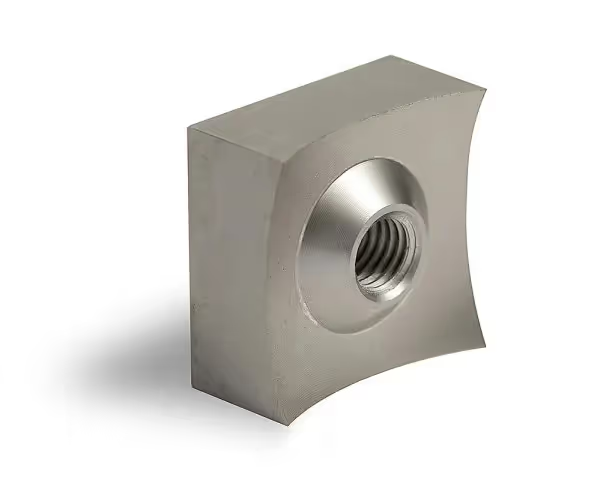
SKD11 (D2) tool steel, heat‑treated and indexable
Screen Options
Typical 10–60 mm, custom apertures on request
Infeed
Conveyor + press roller, or hydraulic pusher depending on material form
Drive Power
15–110 kW across models (selection depends on textile type and density)
Anti‑Winding Hardware
Comb/stripper elements and optimized clearances (configuration dependent)
Chamber Sizes
600–2000 mm cutting width options
Throughput
Material and screen dependent; share kg/h target + feedstock for a tailored estimate
| Model | Cutting Width (mm) | Motor Power (kW) | Screen (mm) | Typical Use |
|---|---|---|---|---|
| RTM‑TX600 | 600 | 15–22 | 10–40 | Light/medium textile scraps |
| RTM‑TX800 | 800 | 22–37 | 10–50 | Mixed garments & nonwovens |
| RTM‑TX1000 | 1,000 | 37–55 | 20–60 | High‑throughput mixed textile waste |
| RTM‑TX1500 | 1,500 | 55–90 | 20–60 | Dense rolls / bulky feed with dedicated infeed |

Comprehensive Warranty and Lifetime Support: Your Success is Our Priority
Your investment in a Repolyx Systems shredder is backed by our commitment to performance and reliability. We provide robust coverage and responsive service to keep your operation running at peak efficiency.
Standard 1‑Year Ironclad Warranty
Full 12‑month coverage on major components and workmanship.
Customizable Extended Coverage
Flexible options for motors, bearings, hydraulics, and control systems.
24/7 Priority Technical Support
Remote troubleshooting and operating guidance when you need it.
On‑Site Service & Professional Training
Commissioning, maintenance training, and preventative health checks.
Textile Shredder Applications
Primary size reduction for soft, stringy, and layered textile waste.
Fabric Cutting Scraps
Offcuts and production waste from garment and upholstery manufacturing.
Garments & Mixed Textiles
Post‑industrial garments and mixed textile streams after sorting.
Nonwovens & Rolls
Geotextiles, nonwoven rolls, and filter fabrics with dedicated infeed.
Yarn Bundles
Yarn waste, selvage, and stringy bundles requiring anti‑winding setup.
What output size can you produce?
Output size is defined by the screen. Typical textile applications use 10–60 mm screens, depending on downstream equipment.
How do you reduce wrapping from stringy textiles?
We configure knife geometry, chamber clearances, and anti‑winding hardware (comb/stripper elements) based on your feedstock and target size.
Can it handle garments with buttons or zippers?
We recommend upstream sorting to remove metals and hard parts. For unavoidable contamination, add metal detection and choose a conservative configuration.
Do you offer infeed conveyors and dust control?
Yes—conveyors, press rollers, dust extraction interfaces, and safety options can be integrated depending on your facility setup.